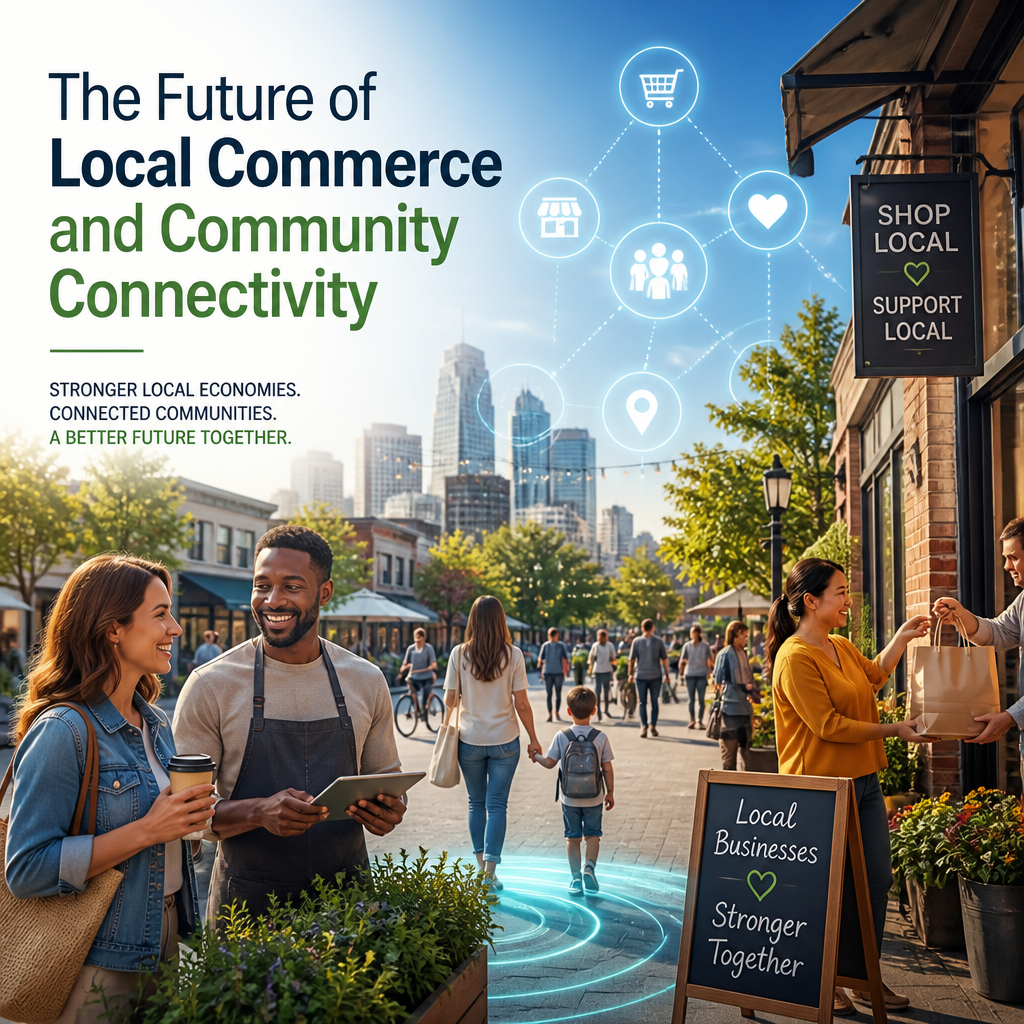
The Future of Local Commerce and Community Connectivity
The Future of Local Commerce and Community Connectivity
Local commerce is entering a new era. While online shopping has transformed how people discover and purchase products, consumers are increasingly looking for something digital platforms cannot fully provide: a meaningful connection to their community.
The future of local commerce will combine technology, convenience, and human interaction. Neighborhood businesses will use digital tools not to replace personal relationships, but to strengthen them.

A More Connected Local Marketplace
For years, local businesses have relied on word-of-mouth recommendations, printed advertisements, and foot traffic. These methods remain valuable, but modern customers also expect businesses to be easy to find online.
Search engines, social media, digital maps, and community platforms now help people discover nearby restaurants, retailers, service providers, and events. A small business with an updated online presence can reach customers who may never have passed its storefront.

This creates a more connected local marketplace where residents can:
- Discover independent businesses nearby
- Read reviews and recommendations
- Compare products and services
- Reserve items or appointments online
- Participate in community events
- Support local causes and organizations
The result is a more convenient experience for customers and greater visibility for local entrepreneurs.

Technology That Supports Personal Service
Digital tools are becoming especially valuable when they complement, rather than replace, personal service. Online ordering, contactless payments, loyalty programs, and automated appointment scheduling can save time for both businesses and customers.
For example, a neighborhood bakery might allow customers to place orders through a website while continuing to offer personalized recommendations in-store. A local salon can use online booking software while building long-term relationships with clients. A community bookstore might promote events through email and social media, then host conversations that cannot be replicated online.
This balance is essential. Customers want speed and convenience, but they also value trust, familiarity, and genuine interaction. Businesses that use technology to make service smoother can spend more time focusing on the customer experience.
The Growth of Community-Based Platforms
The next stage of local commerce will likely involve platforms designed specifically around neighborhoods and shared interests. These platforms may combine business directories, local news, event calendars, marketplace features, and community discussions in one place.
Unlike large global platforms, community-based services can emphasize local relevance. Users may receive recommendations based on their neighborhood, interests, and past interactions. Businesses can communicate directly with nearby customers instead of competing for attention in a crowded national marketplace.
These platforms can also improve collaboration among local organizations. Businesses, schools, nonprofits, and residents may use shared digital spaces to promote initiatives, coordinate events, and respond to community needs.
Greater Opportunities for Small Businesses
Technology is lowering some of the barriers that have historically made it difficult for small businesses to compete. Affordable website builders, digital payment systems, online advertising, and customer relationship tools give independent companies access to capabilities once available only to large corporations.
However, visibility alone is not enough. Successful local businesses will need to provide clear value and remain responsive to customer expectations. Important priorities include:
- Maintaining accurate business information online
- Responding thoughtfully to reviews and questions
- Offering convenient digital and in-person experiences
- Communicating consistently across platforms
- Demonstrating genuine involvement in the community
Businesses that combine strong digital communication with reliable service will be better positioned to earn lasting customer loyalty.
Building Trust in a Digital Community
As local commerce becomes more connected, trust will become even more important. Customers want to know that their personal information is secure, that reviews are authentic, and that businesses genuinely support the communities they serve.
Transparency can help build this trust. Businesses should clearly explain their policies, protect customer data, and communicate openly when problems occur. Showing support for local events, charities, and community projects can also demonstrate a commitment that goes beyond sales.
At the same time, communities must work to ensure that digital access is inclusive. Local connectivity should not exclude people who lack reliable internet access, digital skills, or modern devices. Libraries, community centers, and public programs can help make sure more residents benefit from new opportunities.
A Future Built Around Belonging
The future of local commerce is not simply about faster transactions or more sophisticated technology. It is about creating stronger connections between people, businesses, and places.
When digital tools help residents discover nearby services, support independent businesses, and participate in shared activities, commerce becomes part of a larger community experience. Local businesses remain successful not only because they sell useful products, but because they contribute to the character and resilience of their neighborhoods.
The communities that thrive will be those that embrace innovation while preserving the personal relationships that make local life meaningful. In that future, technology will not make neighborhoods less personal. Used thoughtfully, it will help people feel more connected to where they live.