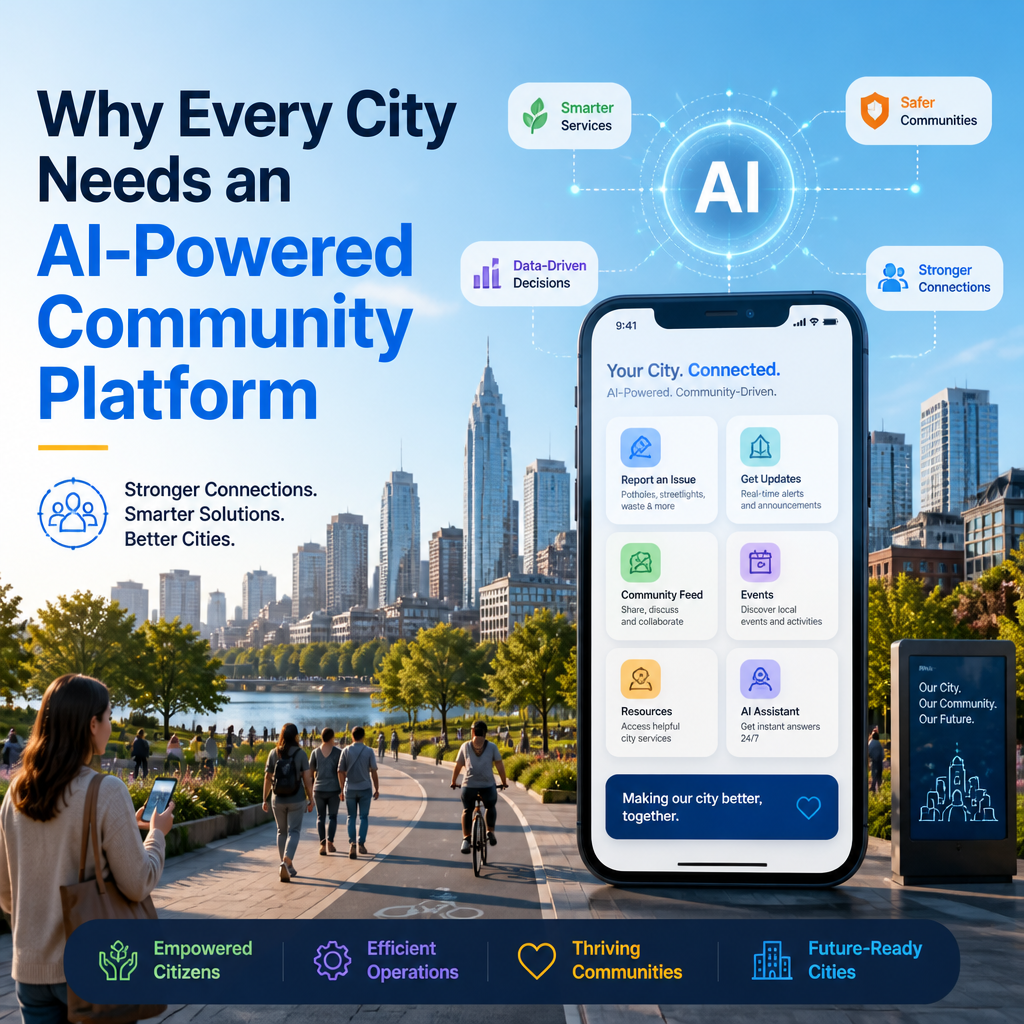
Why Every City Needs an AI-Powered Community Platform
Why Every City Needs an AI-Powered Community Platform
Cities are more than roads, buildings, and public services. They are living communities made up of people with different needs, ideas, experiences, and goals. Yet many residents still struggle to connect with neighbors, access local information, and make their voices heard.
An AI-powered community platform can help cities become more connected, responsive, and inclusive. By combining artificial intelligence with digital communication tools, these platforms create a central space where residents, organizations, and local governments can work together.

Making Local Information Easier to Find
Important city information is often scattered across websites, social media pages, newsletters, and printed notices. Residents may miss updates about road closures, public meetings, community events, emergency alerts, or local services.
An AI-powered platform can bring this information together in one accessible location. Artificial intelligence can organize content, identify relevant updates, and deliver personalized notifications based on a resident’s interests, location, or needs.

For example, a resident could receive updates about:
- Nearby events and activities
- Public transportation changes
- Recycling and waste collection schedules
- Local job opportunities
- Community safety announcements
- City council meetings and decisions
This saves time and helps residents stay informed without searching through multiple sources.

Strengthening Communication Between Residents and Leaders
Effective civic communication should be a two-way process. Residents need reliable ways to share concerns, while city leaders need practical methods for understanding public priorities.
An AI-powered community platform can make this communication faster and more organized. Residents might report potholes, broken streetlights, noise concerns, or safety issues through a simple online form or conversational chatbot. AI can then categorize submissions, detect urgent problems, and direct them to the appropriate department.
City officials can also use aggregated data to identify trends. If many residents report the same issue in one neighborhood, leaders can recognize the problem more quickly and allocate resources more effectively.
This creates a clearer feedback loop between communities and local government.
Building Stronger Neighborhood Connections
Modern city life can sometimes feel disconnected. People may live close to one another without knowing their neighbors or discovering opportunities to participate locally.
A community platform can help residents connect around shared interests and common goals. AI can recommend relevant groups, events, volunteer opportunities, and discussions based on location and preferences.
Residents could use the platform to:
- Organize neighborhood cleanups
- Find local clubs and classes
- Exchange recommendations
- Support small businesses
- Coordinate mutual aid
- Share community announcements
These connections can strengthen trust and encourage more people to participate in local life.
Supporting More Inclusive Communities
Not every resident has the same access to information or the same ability to participate. Language barriers, disabilities, limited transportation, and demanding work schedules can make civic engagement difficult.
AI can make community platforms more accessible through translation, voice interaction, automated summaries, and personalized content. Information can be presented in multiple languages and formats, allowing more residents to take part.
Accessibility features can include:
- Real-time translation
- Screen-reader-friendly content
- Voice-based navigation
- Plain-language summaries
- Automated captions for meetings
- Notifications through multiple channels
When more people can participate, city decisions are more likely to reflect the full community.
Helping Local Businesses and Organizations Grow
A healthy city depends on strong local businesses, nonprofits, and community organizations. However, smaller organizations may not have the resources to reach residents effectively.
An AI-powered community platform can promote local services and connect organizations with people who are most likely to benefit from them. A resident searching for a food pantry, childcare provider, repair service, or cultural event could receive relevant local recommendations.
The platform can also help businesses understand community needs without relying on expensive research. Insights into local interests and concerns can support better services, stronger partnerships, and more targeted outreach.
Using Data Responsibly
The benefits of artificial intelligence must be balanced with privacy, transparency, and accountability. Residents should understand what data is collected, how it is used, and who can access it.
Cities should establish clear safeguards, including:
- Strong data protection policies
- Transparent AI decision-making
- Human oversight
- Consent-based personalization
- Regular security audits
- Options to control notifications and data sharing
Technology should support residents rather than monitor them. Trust is essential for any successful community platform.
Creating More Connected Cities
An AI-powered community platform is not simply another city website or social network. It is shared digital infrastructure that can connect residents, public institutions, businesses, and organizations.
By making information easier to access, improving communication, supporting inclusion, and encouraging participation, these platforms can help cities respond more effectively to everyday challenges.
The cities of the future will not be defined only by smart buildings or advanced transportation. They will also be defined by how well people connect, collaborate, and care for the places they call home. An AI-powered community platform can provide the foundation for that stronger, more engaged civic life.