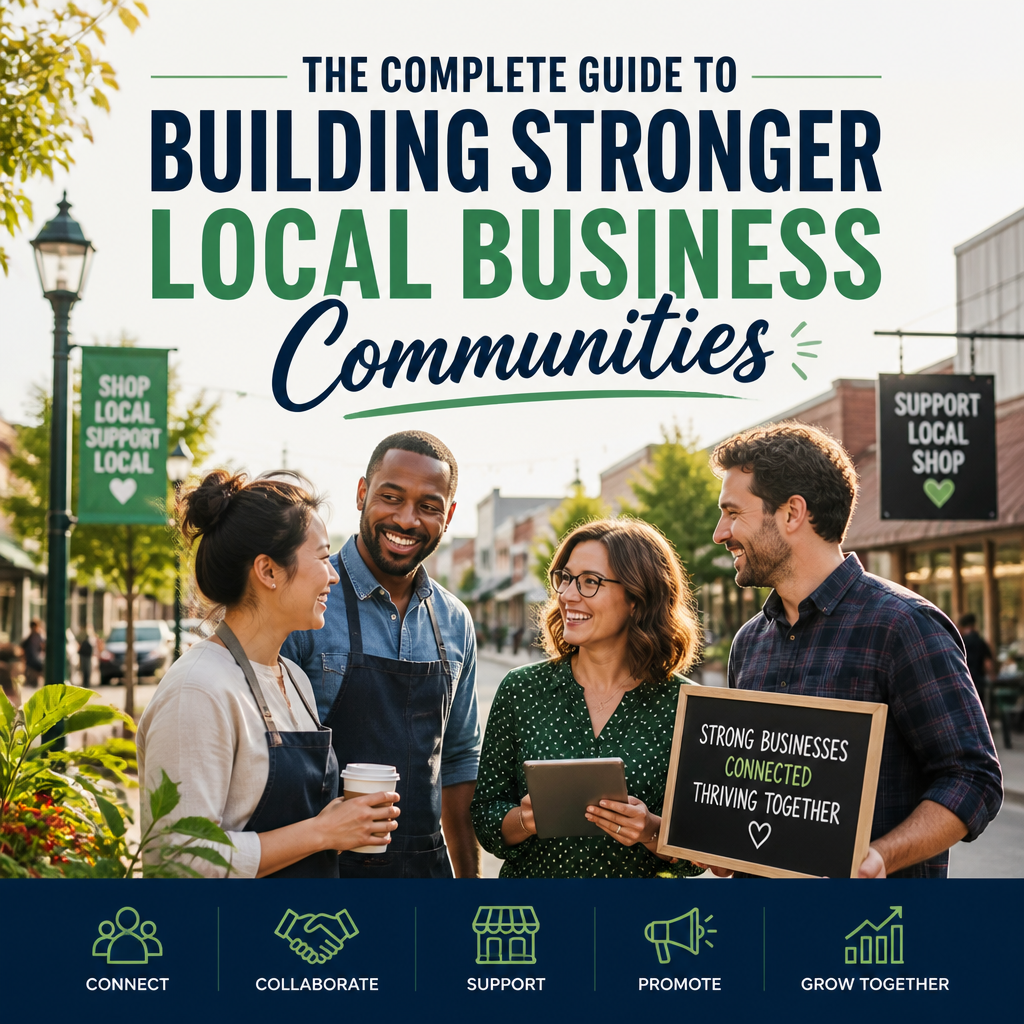
The Complete Guide to Building Stronger Local Business Communities
The Complete Guide to Building Stronger Local Business Communities
Strong local business communities create more than economic growth. They build trust, encourage collaboration, support local jobs, and make neighborhoods more resilient. When business owners work together, they can share resources, solve common challenges, and create experiences that keep customers coming back.
Whether you run a retail shop, professional service, restaurant, or home-based business, building stronger connections in your area can help your business grow while contributing to a healthier local economy.

Why Local Business Communities Matter
Independent businesses often face challenges that larger companies can manage more easily, including limited marketing budgets, staffing shortages, and changing customer expectations. A connected business community gives owners access to practical support and shared knowledge.
Local collaboration can help businesses:

- Reach new customers through referrals
- Reduce costs through group purchasing
- Share marketing opportunities
- Learn from other business owners
- Respond more effectively to community needs
- Create a stronger sense of local identity
Customers also benefit. They gain access to unique products, personal service, and businesses that understand the character of the neighborhood.
Start by Building Genuine Relationships
The foundation of a strong business community is trust. Networking should not be limited to exchanging business cards or promoting your own services. Focus on forming genuine relationships with people who share an interest in the area’s success.

Attend local events, introduce yourself to nearby business owners, and take time to learn about their goals. Visit other local businesses as a customer when possible. Small, consistent interactions can lead to valuable partnerships over time.
Join Local Organizations
Chambers of commerce, business associations, neighborhood groups, and professional networks are useful places to meet other owners. These organizations often provide:
- Networking events
- Educational workshops
- Local advocacy
- Promotional opportunities
- Business directories
- Community projects
Choose groups that align with your values and business goals. Active participation is usually more valuable than simply paying membership dues.
Create Collaborative Marketing Opportunities
Businesses can often achieve greater visibility by promoting one another. Collaborative marketing allows several companies to share audiences and reduce promotional costs.
Consider organizing:
- Local shopping days
- Joint discounts
- Seasonal events
- Business-to-business referral programs
- Shared social media campaigns
- Local gift guides
- Community contests
For example, a café might partner with a bookstore for a reading event, while a fitness studio could collaborate with a health food shop on a wellness promotion. The best partnerships connect businesses naturally and create clear value for customers.
Support Local Events and Causes
Community involvement shows that your business is invested in more than sales. Supporting local events, charities, schools, and cultural programs can strengthen public trust and improve community life.
Support does not always have to involve a large financial contribution. Businesses can also provide:
- Volunteer time
- Meeting space
- Products or services
- Event promotion
- Sponsorship materials
- Professional expertise
Choose causes that relate to your values and customers. Consistent involvement is more meaningful than occasional publicity-focused donations.
Share Knowledge and Resources
Business owners do not need to solve every problem alone. Sharing knowledge can make the entire local economy stronger.
You might host a workshop on digital marketing, invite an accountant to explain tax basics, or create a small peer group for discussing staffing and operations. Businesses can also share resources such as delivery services, equipment, event supplies, or training opportunities.
Create a Local Resource Network
A simple online group or email list can make communication easier. Members can share:
- Local business news
- Supplier recommendations
- Staffing leads
- Upcoming events
- Emergency updates
- Government programs
- Customer trends
Keep the group useful and respectful. Avoid turning it into a constant sales channel. The goal is to provide practical support and encourage cooperation.
Embrace Digital Community Building
A local business community should exist both offline and online. Social media can help businesses highlight one another and keep residents informed about local activity.
Create shared hashtags, feature neighboring businesses, and promote local events through community pages. Short videos, customer stories, and behind-the-scenes posts can help people see the individuals behind local brands.
A shared online presence is especially useful during challenging periods, when businesses need to communicate changes quickly and encourage customers to continue shopping locally.
Measure Progress and Stay Consistent
Community building is a long-term effort. Track results, but remember that not every benefit appears immediately in sales figures.
Useful measures include:
- New referral relationships
- Event attendance
- Social media engagement
- Customer feedback
- Membership participation
- Repeat customers
- Collaborative projects completed
Review what is working and adjust your approach. Most importantly, remain reliable. Attend meetings, follow through on commitments, and recognize the contributions of other businesses.
Building a Stronger Future Together
A thriving local business community depends on cooperation, trust, and consistent participation. By forming genuine relationships, sharing resources, supporting local causes, and creating collaborative opportunities, business owners can strengthen both their companies and the neighborhoods they serve.
The most successful communities are built one conversation, partnership, and shared project at a time. When local businesses grow together, everyone has a better chance to succeed.