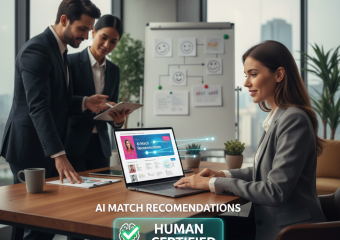
Certified Human Specialists: The Secret Weapon in AI Matchmaking
Why Certified Human Specialists Are the Secret Weapon in Modern AI Matchmaking
AI-driven matchmaking—between buyers and suppliers, investors and startups, or partners across ecosystems—has matured rapidly. But as algorithms scale connections, an often-overlooked asset is emerging as essential: certified human specialists. These trained professionals add context, verify information, clarify needs, and safeguard the commercial relationships that algorithms propose. In B2B environments where reputation, compliance, and clarity matter, the human layer is not a fallback—it’s a multiplier.
The current state of AI matchmaking
Modern matchmaking engines use richer data and more sophisticated models than ever before. They identify patterns, predict compatibility, and accelerate introductions. Yet raw matches can miss industry nuance, regulatory constraints, or the unstated priorities that determine whether a conversation becomes a contract. That is where human expertise becomes decisive.

What certified human specialists add
Certified human specialists are professionals who combine domain knowledge, process training, and a formal credentialing or certification pathway. They work alongside AI to ensure that matches are not only technically relevant but commercially viable and strategically sound.
1. Reviewing context
Algorithms can flag shared attributes and inferred intent, but humans review the broader context: company strategy, recent organizational changes, and market sentiment. Specialists interpret subtle signals—leadership shifts, product roadmaps, or sector-specific timing—that influence match quality.
2. Verifying information
Data sources vary in accuracy. Certified specialists verify critical details such as ownership, financial signals, certifications, and compliance status. This verification reduces risk by catching mismatches and outdated or misleading profiles before introductions are made.
3. Clarifying business needs
Business requirements are rarely fully expressed in brief forms or inferred intent. Specialists conduct targeted interviews, synthesize needs into clear briefs, and translate ambiguous goals into evaluable criteria—turning an AI-suggested lead into a prioritized opportunity list.

4. Supporting important commercial connections
For high-value deals or strategic partnerships, specialists manage introductions, set expectations, and facilitate early governance. They mediate conversations, surface deal-breakers early, and ensure that both parties approach negotiations with aligned information and timelines.
Practical examples
Concrete scenarios illustrate how certification and human judgment improve outcomes.
- Enterprise procurement: An AI suggests three suppliers for a specialized component. A certified specialist reviews supplier audit histories, verifies capacity claims, and confirms compliance with procurement policies before sourcing proceeds.
- Cross-border partnerships: A matchmaking engine finds complementary product teams in different jurisdictions. A specialist clarifies regulatory differences, language nuances, and IP expectations before a pilot is initiated.
- Investment introductions: For a late-stage startup, a specialist confirms recent funding rounds, validates traction claims with independent sources, and prepares a focused briefing for potential investors.
Why certification matters
Certification signals that specialists follow established standards: ethical handling of data, consistent verification processes, and familiarity with legal or industry-specific frameworks. For buyer and seller organizations, that reduces perceived risk and increases willingness to accept AI-facilitated introductions.
Integrating specialists into AI workflows
To get the most value, organizations should design human-in-the-loop workflows where specialists operate at key decision points rather than on every match. Typical points include:
- Pre-introduction verification for high-value matches
- Clarification interviews for ambiguous requirements
- Post-match monitoring during pilot and onboarding phases
Measurement should focus on business outcomes: time to contract, pilot conversion rate, customer satisfaction, and reductions in due-diligence rework.
Responsible AI and trust
Human specialists are central to responsible AI practice. They can audit model outputs, identify bias or data gaps, and provide explainable justifications to stakeholders. Where regulatory scrutiny or reputational risk exists, certified professionals act as accountable stewards who balance automation speed with human judgment.
Conclusion
AI matchmaking scales discovery; certified human specialists ensure commercial sense. For B2B leaders, the question is not whether to use AI, but how to pair it with credentialed human expertise that reviews context, verifies claims, clarifies needs, and supports the delicate work of forming strategic relationships. When implemented thoughtfully, this hybrid approach delivers faster, safer, and more trustworthy match outcomes—transforming matches into meaningful business.