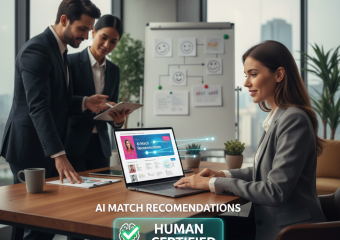
The Future of B2B Deal Rooms with Gemini 3.8 and Human Experts
The Future of B2B Deal Rooms: Combining Gemini 3.8 Intelligence with Verified Human Experts
Introduction
B2B deal rooms are evolving from static repositories into dynamic decision platforms. By integrating advanced models such as Gemini 3.8 with verified human experts, organizations can create deal rooms that accelerate discovery, reduce friction, and preserve the judgment that complex commercial negotiations require. This article explains how AI intelligence and verified human experts can work together across matchmaking, contract workflows, verification, collaboration, and commercial decision-making.
Why combine AI and human expertise?
Artificial intelligence excels at pattern recognition, data synthesis, and running repeatable processes at scale. Human experts contribute domain knowledge, context sensitivity, ethical judgment, and relationship management skills. When both are combined in B2B deal rooms, each compensates for the other’s limitations: the model handles volume and consistency while humans validate nuance and make discretionary calls.

How Gemini 3.8 augments deal-room workflows
Gemini 3.8 represents a class of large multimodal models that can read text, summarize documents, and generate structured outputs. In a B2B deal room, it can:
- Summarize incoming RFPs and diligence materials into concise briefs.
- Extract key commercial terms and surface anomalies for review.
- Match opportunities to internal teams or external partners using semantic similarity.
- Automate routine drafting and redlining suggestions for standard contract language.
These capabilities speed routine tasks and free experts to focus on judgment-intensive work.

Roles of verified human experts
Verified human experts in a modern deal room act as validators, negotiators, and relationship stewards. Their responsibilities typically include:
- Reviewing AI outputs for accuracy and business fit.
- Making final decisions on exceptions, concessions, and pricing strategies.
- Handling sensitive negotiations and maintaining client trust.
- Providing explicit feedback to refine model behavior and guardrails.
Verification—through credentials, prior transaction history, or platform reputation—ensures those humans are accountable and qualified to intervene when the AI flags complex or ambiguous items.


Practical examples
Matchmaking: finding the right counterparty
Use case: A procurement team uploads a complex RFP. Gemini 3.8 scans supplier profiles, past performance, and technical specs to generate a ranked shortlist. A verified sourcing expert reviews the shortlist, checks for strategic alignment, and confirms outreach priorities. The model speeds candidate discovery; the expert applies commercial strategy and risk appetite.
Contract workflows: draft, redline, finalize
Use case: The AI proposes a first-draft contract based on standard playbooks and extracted terms. It highlights unusual clauses and suggests alternatives. The human contract specialist evaluates those suggestions, negotiates with counsel or the counterparty, and approves final language. This human-in-the-loop approach reduces lawyer hours on standard items while preserving legal oversight where it matters.
Verification: trust and compliance
Use case: Gemini 3.8 flags potential compliance risks—sanctions exposure, regulatory mismatches, or unusual ownership structures. Verified compliance officers perform targeted checks, request additional documents, and sign off before a transaction progresses. The combination reduces false positives and ensures regulated steps receive human attention.
Collaboration: shared context and version control
Use case: Deal rooms become a single source of truth where the model maintains summaries and change logs while experts attach rationale and negotiation notes. When a salesperson re-enters the room, they see the AI-generated synopsis plus the human annotations that explain past trade-offs, preserving institutional memory across teams.
Commercial decision-making: augmenting—not replacing—judgment
Use case: Pricing recommendations from the model are paired with scenario analyses created by commercial leads. The AI can model outcomes under different payment terms or SLAs; humans then weigh strategic value, future pipeline potential, and relationship considerations before setting final terms.
Implementation considerations
Successful integration requires attention to governance, data quality, and user experience. Key considerations include:
- Audit trails: log AI suggestions and human approvals for compliance and learning.
- Feedback loops: collect corrections from experts to refine model outputs over time.
- Access controls: ensure sensitive materials are visible only to verified users.
- Explainability: provide clear rationales for model recommendations so humans can evaluate them efficiently.
Organizations should pilot specific workflows—such as contract redlines or supplier matching—before scaling across the enterprise.
Conclusion
The future of B2B deal rooms lies in calibrated collaboration: AI agents like Gemini 3.8 handle scale and consistency, while verified human experts preserve judgment, compliance, and commercial nuance. Together they can make deal rooms faster and more informative without displacing the human decisions that determine long-term value. Thoughtful design, governance, and iterative learning will be essential to capture benefits while managing risks.