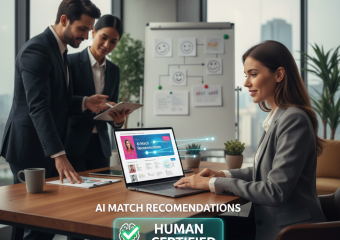
Future of B2B Deal Rooms: Gemini 3.8 + Human Experts
Future of B2B Deal Rooms: Gemini 3.8 + Verified Human Experts
The landscape of B2B deal rooms is changing. Advances in large multimodal models such as Gemini 3.8 intelligence, when paired with verified human experts, offer a pragmatic path to faster, safer, and more confident commercial transactions. This article explains how that combination supports matchmaking, contract workflows, verification, collaboration, and commercial decision-making with practical examples and implementation considerations.

Why combine Gemini 3.8 intelligence with human experts?
AI systems like Gemini 3.8 can process large volumes of documents, detect patterns, and surface insights at scale. But commercial deals remain judgment-rich activities where context, industry knowledge, and reputational nuance matter. Bringing verified humans into the loop preserves those qualitative judgements while letting AI handle heavy lifting.

In practice, the hybrid approach reduces routine friction (data extraction, redlines, initial matching) and increases confidence where human oversight is essential (counterparty trust, strategic trade-offs, escalation). It’s not about replacing people; it’s about allocating effort where it creates the most value.
Practical capabilities enabled
Matchmaking — faster, targeted introductions
Gemini 3.8 intelligence can analyze product catalogs, procurement needs, historical deals, and public signals to generate ranked match lists. Verified experts validate matches, add context (regulatory fit, cultural compatibility), and guide outreach strategies.

Example: A procurement team uploads requirements to the deal room. The AI returns a shortlist of vendors with a confidence score and highlighted risks. A verified industry advisor reviews and adjusts the shortlist, adding a human perspective on supplier capacity and prior relationship history.
Contract workflows — drafting, redlines, and negotiation support
AI accelerates contract lifecycle work by extracting clauses, suggesting standard language, and flagging non-standard terms. Human experts—commercial lawyers or contract managers—approve suggested edits and handle nuanced negotiations.

Example: Gemini 3.8 proposes a negotiation playbook for a licensing clause. A verified counsel reviews the playbook, tailors language to the company’s risk appetite, and tracks negotiation outcomes within the deal room for future learning.
Verification — identity, credentials, and reputational checks
Automated verification can run identity checks, validate company registration data, and surface red flags from public sources. Humans confirm ambiguous results and perform deeper due diligence when necessary.
Example: The AI flags an unusual ownership structure. A verified investigator is notified inside the platform, conducts targeted checks, and appends a human-readable report to the deal record.
Collaboration — shared context and clear handoffs
Deal rooms become collaboration hubs where AI-generated summaries, timelines, and action items are visible to all stakeholders. Verified experts act as facilitators—translating AI outputs into meeting agendas, risk logs, and decisions.
Commercial decisions — data-informed, human-validated
AI can simulate scenarios (pricing sensitivity, margin impacts) and surface tradeoffs. Decision-makers benefit from structured outputs plus a human expert’s interpretation of long-term strategic implications and negotiation posture.
Implementation considerations
Security and compliance
Deal rooms handle sensitive commercial data. Encryption, access controls, and audit trails remain foundational. Organizations must also define clear policies for what data is shared with AI models and how human reviewers access sensitive content.
Human-in-the-loop governance
Design workflows that define when AI suggestions require human sign-off and when they may be applied automatically. Role-based workflows and documented escalation paths keep responsibility clear.
Data quality and training
AI accuracy depends on high-quality inputs. Clean, structured data and consistent document tagging improve recommendations. Verified experts help curate training examples and provide feedback loops that improve future AI behavior.
A practical 6-step roadmap for adoption
- Map core deal-room processes and pain points.
- Identify where AI can automate high-volume tasks safely.
- Define roles for verified experts and human approval gates.
- Implement security and access controls with auditing.
- Run pilot projects on a limited set of deal types.
- Iterate, measure outcomes, and scale proven patterns.
Conclusion
Combining Gemini 3.8 intelligence with verified human experts creates a complementary system: AI delivers scale and speed, humans supply judgment and trust. For organizations that design clear governance, protect data, and prioritize practical pilots, hybrid deal rooms can reduce friction, improve decision quality, and preserve the human relationships that ultimately make B2B deals successful.