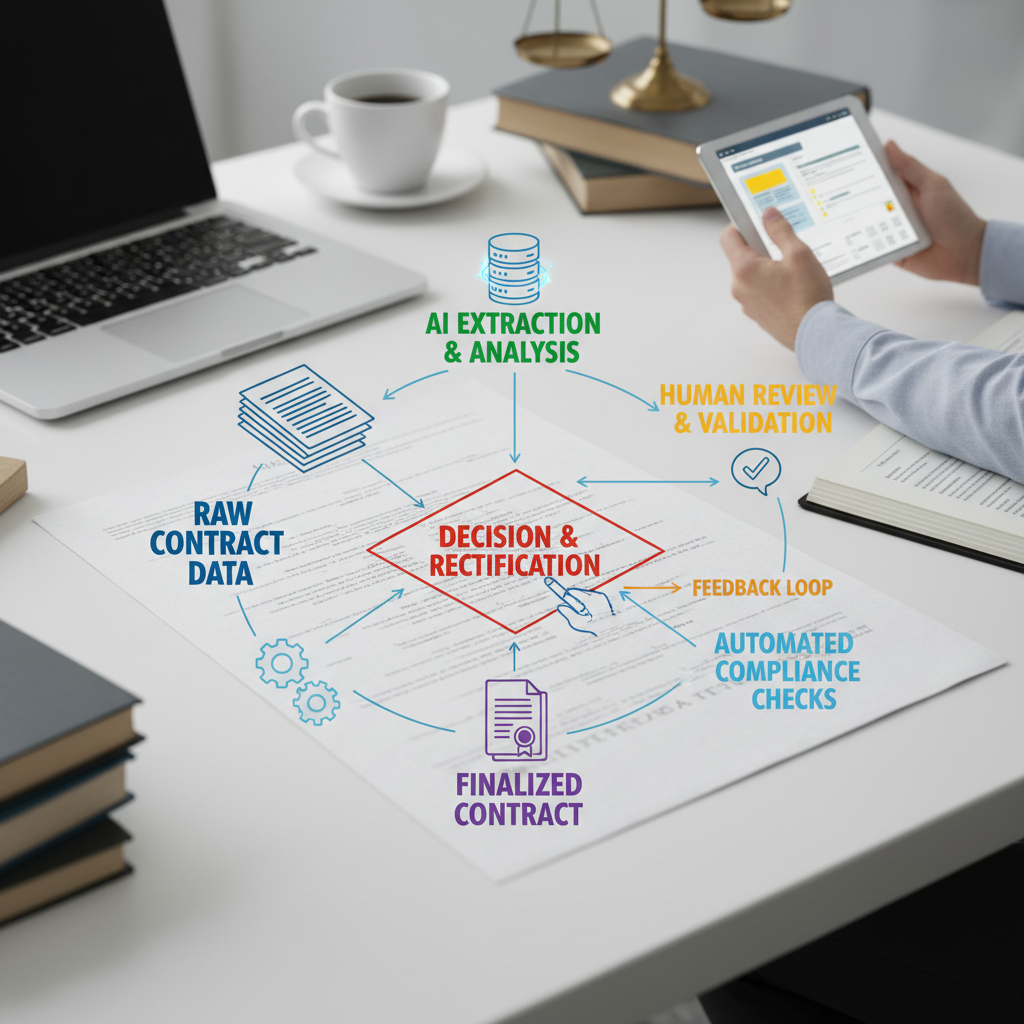
Beyond Automation: Human Audits Prevent Costly MOU Errors
Beyond Automation: Human Audits Prevent Costly MOU Errors
Organizations increasingly rely on automated tools to draft, review, and manage memoranda of understanding (MOUs). Automation speeds up routine tasks, enforces templates, and highlights obvious inconsistencies. But when commercial risk, ambiguous language, or unusual deal structures are involved, machine-only approaches can miss context, misinterpret intent, or introduce subtle errors. This article explains why human specialist audits are essential to prevent costly MOU errors and how a practical human-in-the-loop workflow preserves verification, accountability, and auditability while using AI responsibly.
Where automation helps — and where it falls short
Automated systems excel at repetitive and structured work: extracting party names, validating dates, ensuring required signature blocks exist, and comparing text against approved templates. They reduce human time spent on clerical checks and flag common deviations for review.

However, automation can struggle with context-sensitive judgments. Ambiguous phrases, bespoke commercial terms, and cross-references to external agreements may be misinterpreted. Even a small change — a swapped term or an inaccurate effective date — can alter obligations and financial exposure.
Why human specialist audits matter
Human specialist audits bridge the gap between efficiency and accuracy. Specialists bring domain knowledge, commercial judgment, and an understanding of negotiation history that machines don’t inherently possess. Their work focuses on verification, accountability, and auditability:
- Verification: Confirming that interpreted clauses match commercial intent and that automated suggestions are accurate.
- Accountability: Assigning clear decision ownership for redlines and final approval.
- Auditability: Producing verifiable records of who changed what, why, and when for downstream compliance and dispute resolution.
Practical examples of costly MOU errors a specialist can prevent
These examples are illustrative of common issues that benefit from human scrutiny:
- Effective date mismatch: Automated parsing places the effective date in the wrong fiscal year; a specialist confirms the correct date and checks linked schedules.
- Scope creep: A redline suggested by an automation engine omits a scope limitation; a specialist identifies the omission and restores the intended limitation.
- Payment terms ambiguity: An AI reformulation introduces an unclear milestone definition; a reviewer clarifies the milestone and attaches measurable acceptance criteria.
- Regulatory cross-refs: Citations to laws or compliance obligations are out of date or jurisdictionally incorrect; a human verifies regulatory references and recommends precise language.
Human-in-the-loop workflow: step-by-step
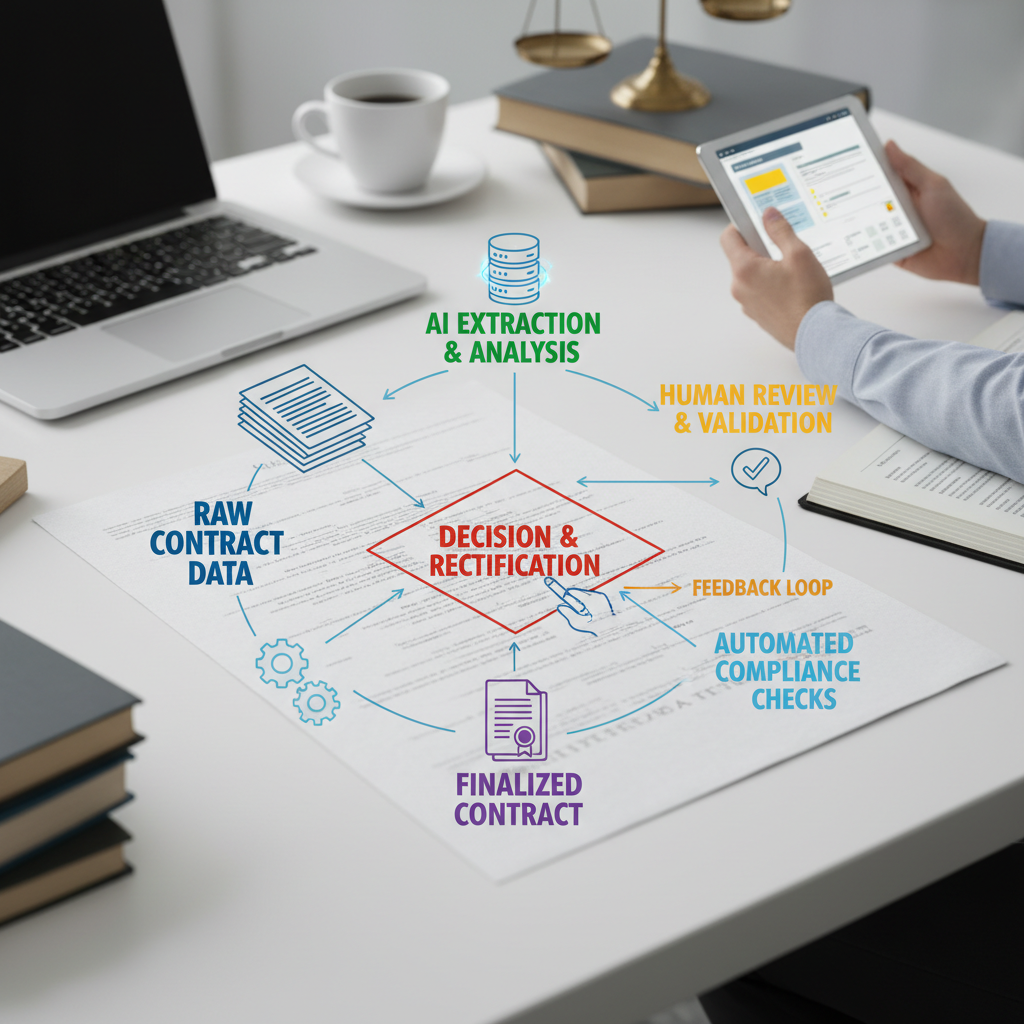
1. Automated ingestion and parsing
Source documents are ingested and parsed by NLP systems to extract key metadata, clause types, and deviations from approved templates.

2. Automated checks and risk scoring
Rules engines and models run consistency checks, flag high-risk clauses, and assign a risk score. Confidence levels are associated with each automated suggestion to guide triage.
3. Specialist review and verification
Human specialist audits focus on items above a risk threshold or low-confidence suggestions. Reviewers verify intent, reconcile commercial history, and consult negotiating parties when needed.
4. Controlled remediation and redlines
Specialists propose changes using tracked redlines. Changes include rationale comments, reference to negotiation records, and links to precedent language where applicable.
5. Approval, sign-off, and accountability
Final sign-off is performed by assigned approvers with explicit accountability. A short sign-off record notes the approver’s role, date, and any escalations.
6. Audit trail and continuous improvement
Every automated suggestion and human action is logged. That audit trail supports post-execution reviews, lessons learned, and model retraining where justified.
Design principles for responsible AI and auditability
To ensure automation supports rather than replaces human judgment, adopt these principles:
- Confidence thresholds: Require human review when model confidence is below a defined level or when risk scores exceed policy limits.
- Explainability artifacts: Store model outputs, rationale summaries, and the inputs used to generate suggestions so reviewers can assess provenance.
- Immutable logs: Capture diffs, reviewer comments, approvals, and timestamps in a tamper-evident store for future audits.
- Role-based accountability: Map decisions to specific roles and define SLAs for specialist response times.
Conclusion: pragmatic balance, not binary choice
Automation and human specialist audits are complementary. Automated tools reduce routine work and surface issues quickly; human reviewers verify nuance, enforce accountability, and create auditable records. By embedding human specialist audits into a clear human-in-the-loop workflow and applying responsible AI design, organizations can materially reduce the risk of costly MOU errors without sacrificing efficiency.