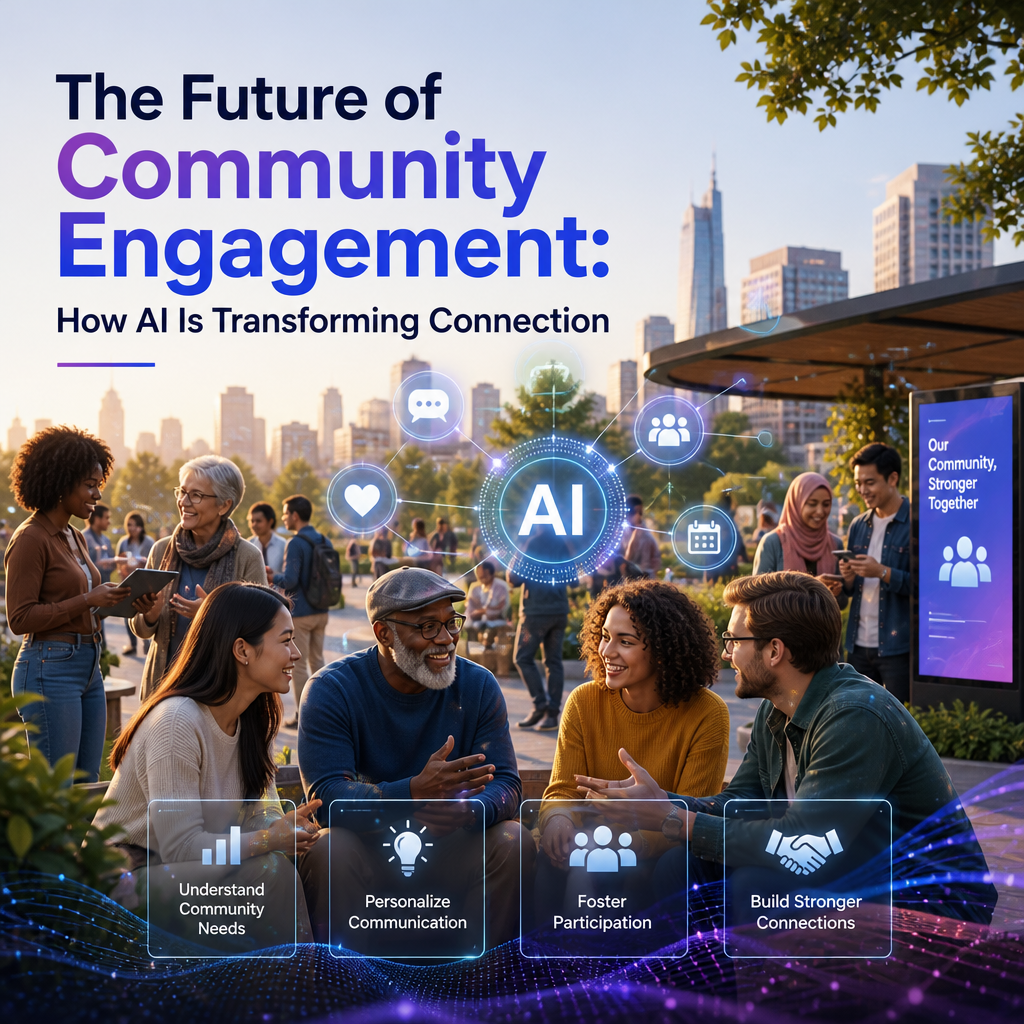
The Future of Community Engagement: How AI Is Transforming Connection
The Future of Community Engagement Starts With AI
Community engagement has always depended on communication, trust, and participation. From neighborhood meetings to online discussion groups, strong communities grow when people feel heard and connected. Today, artificial intelligence is changing how organizations create those connections.
AI is not replacing the human relationships at the heart of community life. Instead, it is helping leaders understand their audiences, respond more quickly, and make participation easier. The future of community engagement starts with AI because technology can support more inclusive, responsive, and meaningful interactions.

Making Communication More Personal
Large communities often include people with different interests, needs, languages, and communication preferences. Sending the same message to everyone may be efficient, but it is rarely effective.
AI can analyze audience data and help organizations deliver more relevant information. A local nonprofit might use AI to identify which residents are interested in food programs, education, transportation, or environmental initiatives. A university could provide students with personalized updates about events, services, and opportunities based on their interests.

Personalized communication makes people more likely to pay attention and participate. It also helps organizations avoid overwhelming audiences with information that does not apply to them.
Smarter Responses in Real Time
Many community members expect quick answers, especially when they are looking for information about public services, events, or support programs. AI-powered chatbots and virtual assistants can provide immediate responses to common questions.

These tools can help users:
- Find event details and registration links
- Locate community services
- Understand eligibility requirements
- Submit basic requests or feedback
- Access information outside normal business hours
Human staff remain essential for complex or sensitive issues. However, AI can handle routine questions and allow teams to focus their time on conversations that require empathy, judgment, and personal attention.
Expanding Access and Inclusion
Effective engagement must include people who have traditionally been left out of important conversations. AI can help reduce several barriers to participation.
Translation tools can make information available in multiple languages. Speech recognition can support people who have difficulty typing. Automated captioning can improve access to virtual meetings and recorded content. AI can also help identify patterns showing that certain groups are not participating, giving organizations an opportunity to improve their outreach.
Accessibility should not be treated as an optional feature. When AI is designed responsibly, it can help more people take part in community life and ensure that diverse perspectives are represented.
Turning Feedback Into Action
Collecting feedback is only the first step. Communities want to know that their ideas are being considered and that their input can lead to change.
AI can review large volumes of survey responses, social media comments, emails, and public meeting transcripts. It can identify recurring themes, emerging concerns, and differences in opinion across groups. This allows leaders to understand community sentiment more efficiently than manual review alone.
For example, an organization might discover that residents support a proposed project but are concerned about transportation or cost. Rather than treating feedback as a simple yes-or-no result, AI can reveal the details that lead to better decisions.
The most important part is transparency. Organizations should explain how feedback is analyzed and show how community input influences outcomes. Technology builds trust only when people can see its value.
Supporting More Effective Community Leaders
AI can also help community managers and organizers work more efficiently. It may assist with planning events, identifying potential volunteers, drafting announcements, or predicting which topics are likely to generate interest.
These capabilities can be especially valuable for small organizations with limited staff and budgets. By reducing administrative work, AI gives leaders more time to build relationships, attend meetings, and engage directly with community members.
Still, successful engagement cannot be automated completely. Data may reveal what people are discussing, but it cannot fully capture personal experiences, cultural context, or emotional needs. Human leadership must guide how AI is used.
Building Trust Through Responsible AI
The future of community engagement depends on responsible implementation. Organizations must protect personal information, communicate clearly about data collection, and regularly evaluate AI systems for bias.
Important principles include:
- Explain how AI tools are being used
- Collect only necessary data
- Provide human support when needed
- Check systems for unfair outcomes
- Give community members meaningful ways to provide feedback
AI should strengthen relationships, not make people feel monitored or ignored. The best systems work quietly in the background while making human interaction more accessible and effective.
A More Connected Future
AI offers communities an opportunity to listen better, respond faster, and include more voices. Its greatest value is not in replacing people but in helping people connect with one another.
When combined with transparency, empathy, and thoughtful leadership, AI can make community engagement more responsive and inclusive. The future of community engagement starts with AI—but it succeeds through human trust, participation, and collaboration.