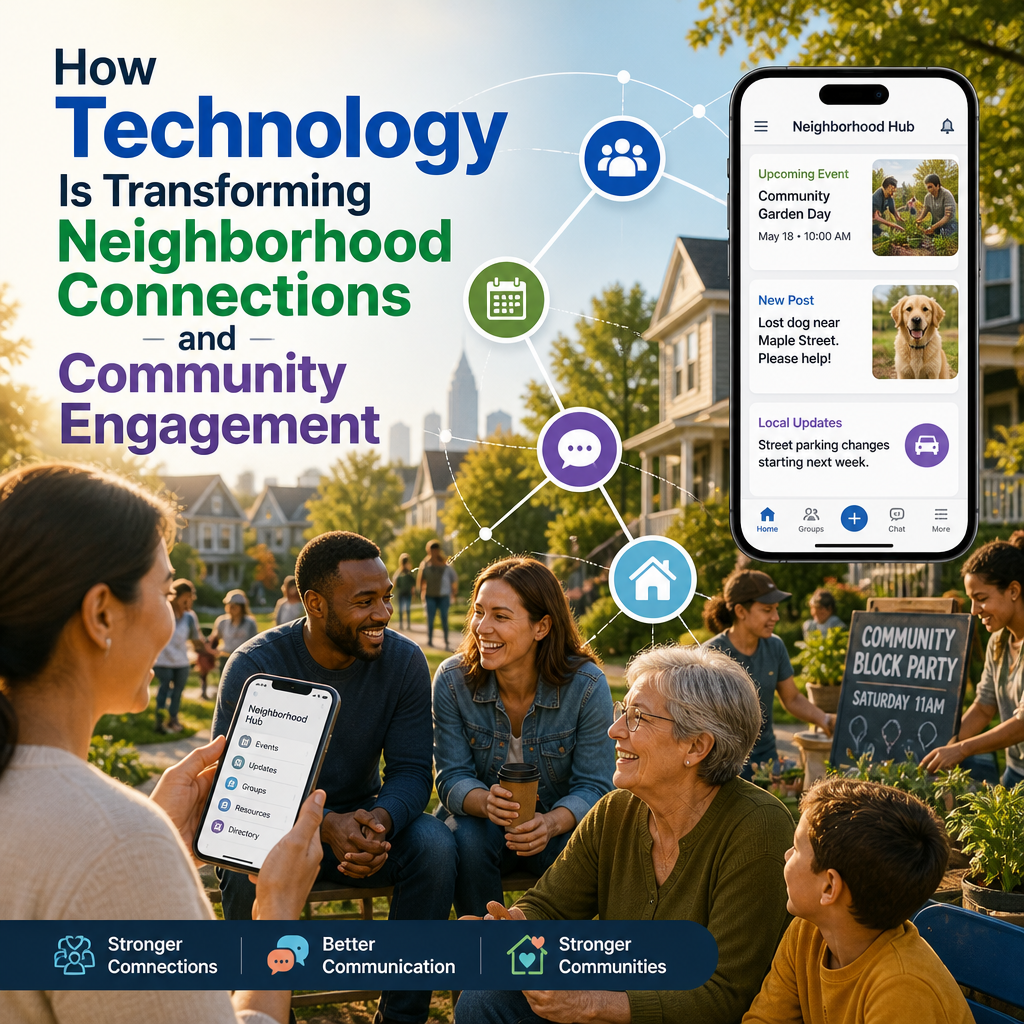
How Technology Is Transforming Neighborhood Connections and Community Engagement
How Technology Is Transforming Neighborhood Connections
Technology is changing the way people communicate, share resources, and build relationships close to home. While digital tools are often associated with global connections, they are also helping neighbors become more informed, involved, and supportive of one another.
From community apps to virtual events, technology is making it easier for people to participate in neighborhood life—even when busy schedules, limited mobility, or physical distance create barriers.

Digital Platforms Bring Neighbors Together
Neighborhood-focused platforms allow residents to communicate quickly and conveniently. People can share local announcements, report safety concerns, recommend businesses, or ask for help with everyday needs.
Common examples include:

- Neighborhood social media groups
- Community messaging apps
- Local forums and online bulletin boards
- Digital newsletters
- City and municipal alert systems
These platforms create a shared space where residents can exchange useful information. A neighbor might post about a lost pet, announce a road closure, recommend a trusted plumber, or organize volunteers for a local cleanup.
Unlike traditional noticeboards, digital platforms can reach hundreds of people within minutes. They also make it easier for residents who are new to the area to become involved.

Technology Makes Community Support More Accessible
One of the most valuable effects of technology is its ability to connect people who need support with those willing to provide it.
Neighborhood groups can coordinate meal deliveries, transportation, childcare exchanges, and assistance for older residents. During severe weather or emergencies, digital communication can help people check on vulnerable neighbors and share updates about shelter, power outages, or available supplies.
Community members can also use online tools to organize:
- Food and clothing drives
- Fundraising campaigns
- Volunteer projects
- Skill-sharing programs
- Emergency response networks
These activities strengthen local relationships because they turn communication into practical action. Technology does not replace personal connection; it helps people discover more opportunities to offer and receive support.
Virtual Events Expand Participation
Not everyone can attend an in-person neighborhood meeting or event. Work schedules, transportation challenges, health concerns, and family responsibilities can prevent residents from taking part.
Video conferencing and livestreaming make local participation more flexible. Community associations can host virtual town halls, planning meetings, workshops, and public discussions. Residents may be able to watch live, submit questions, or view recordings later.
Virtual events are especially useful for including people who might otherwise feel disconnected. A parent caring for young children, a person with limited mobility, or someone working evening shifts can still follow important neighborhood conversations.
Smart Technology Improves Shared Spaces
Technology is also transforming physical community spaces. Smart lighting, digital signage, public Wi-Fi, and environmental sensors can make parks, streets, and gathering areas safer and more useful.
For example, sensors may monitor air quality, traffic patterns, or water usage. Digital signs can provide emergency notices, event information, and public service updates. Smart lighting systems can improve visibility while reducing energy consumption.
These improvements can encourage residents to spend more time outdoors and interact with one another. Better-designed and better-maintained shared spaces often become natural meeting points for community life.
Balancing Convenience With Privacy
Although technology offers many benefits, neighborhoods must use it thoughtfully. Online groups can sometimes spread misinformation, expose personal information, or encourage arguments that would be less likely in face-to-face conversations.
Strong digital communities depend on clear guidelines and respectful communication. Residents should:
- Verify important information before sharing it
- Avoid posting private details without permission
- Use inclusive and respectful language
- Report harassment or harmful content
- Remember that online messages affect real people
Privacy is equally important. Community platforms should explain how personal information is collected and protected. Residents should also review security settings and be cautious when sharing addresses, phone numbers, or financial details.
Building Stronger Neighborhoods Through Technology
Technology is transforming neighborhood connections by making communication faster, support more accessible, and participation more inclusive. However, the tools themselves are only part of the solution.
Strong communities still depend on trust, empathy, and consistent involvement. Digital platforms work best when they lead to real-world cooperation—neighbors meeting one another, sharing responsibilities, supporting local organizations, and caring for shared spaces.
When used responsibly, technology can help people feel more connected to where they live. It gives residents new ways to participate, strengthens local networks, and creates opportunities for a more informed and supportive neighborhood.