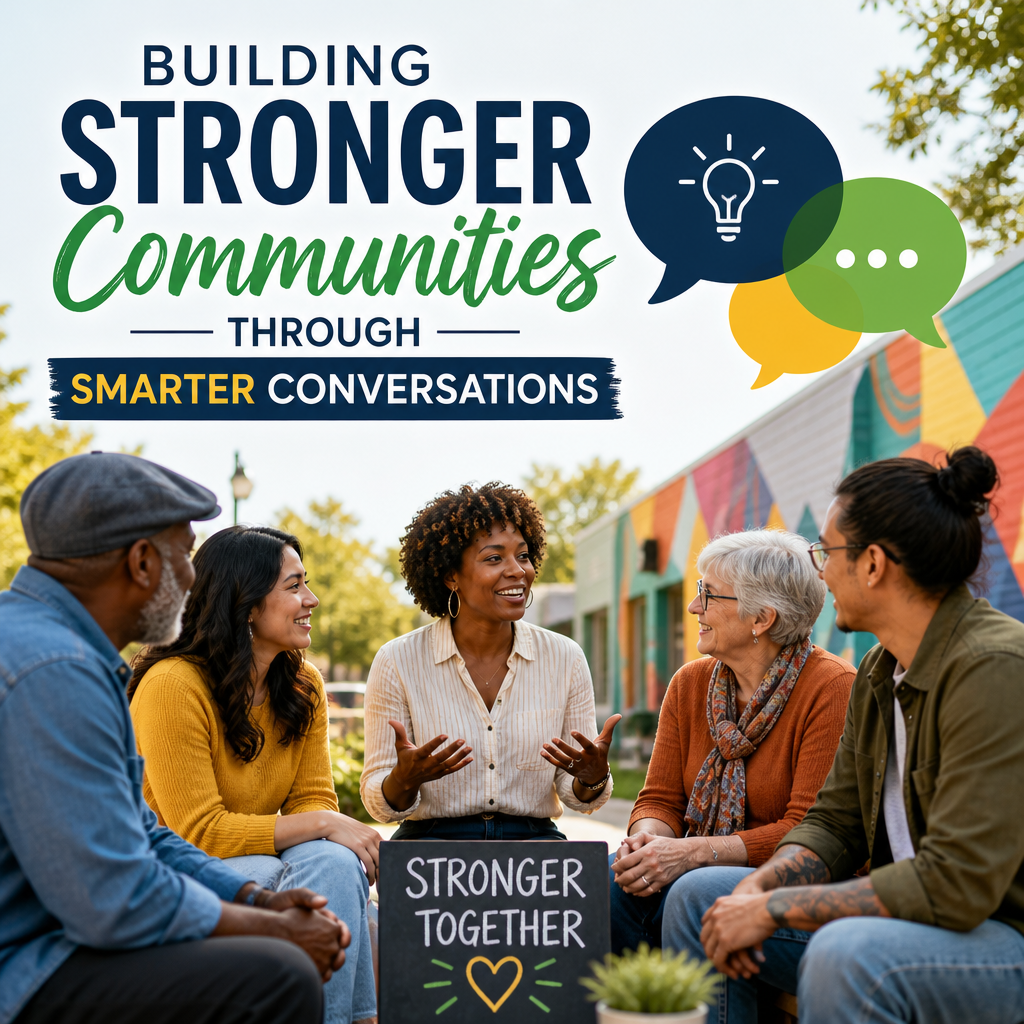
Building Stronger Communities Through Smarter Conversations
Building Stronger Communities Through Smarter Conversations
Strong communities are built on more than shared locations, interests, or goals. They grow through meaningful conversations—discussions that encourage understanding, create trust, and help people work together. In a time when communication is often rushed or divided, learning to have smarter conversations can make a lasting difference.
Smarter conversations are not about using complicated language or winning debates. They are about listening carefully, asking thoughtful questions, and creating space for different perspectives. These simple habits can strengthen relationships and help communities become more connected and resilient.

Why Conversation Matters
Every community depends on communication. Neighborhood groups, schools, workplaces, volunteer organizations, and online networks all use conversations to make decisions and solve problems.
When communication breaks down, misunderstandings grow. People may feel ignored, excluded, or unwilling to participate. On the other hand, open and respectful dialogue helps people recognize shared concerns and discover practical solutions.

Conversation also creates belonging. When individuals feel heard, they are more likely to contribute their ideas, support others, and take responsibility for the community around them.
What Makes a Conversation Smarter?
A smarter conversation is intentional, respectful, and focused on understanding. It does not require everyone to agree. Instead, it encourages people to explore differences without allowing those differences to become barriers.

Listen to Understand
Listening is one of the most powerful tools in any conversation. Too often, people prepare their response while someone else is still speaking. Active listening requires attention, patience, and a willingness to understand the meaning behind another person’s words.
Helpful listening habits include:
- Avoiding interruptions
- Asking clarifying questions
- Acknowledging another person’s feelings
- Summarizing what you heard
- Responding to the idea rather than attacking the person
These actions signal respect and reduce the chance of unnecessary conflict.
Ask Better Questions
Good questions can shift a conversation from disagreement to discovery. Instead of asking questions that sound accusatory, choose language that invites explanation.
For example, “Why would anyone support that idea?” can create defensiveness. A question such as “What experiences led you to that view?” encourages a more thoughtful response.
Open-ended questions help people explain their concerns, priorities, and experiences. They also reveal common ground that may not be obvious at first.
Make Room for Different Voices
Communities become stronger when participation is not limited to the loudest or most confident individuals. Leaders and group members should create opportunities for quieter voices to contribute.
This might include allowing time for reflection, inviting written feedback, rotating meeting facilitators, or using small-group discussions. Making room for different communication styles helps ensure that decisions reflect a broader range of experiences.
Turning Dialogue Into Action
Conversation is valuable, but it becomes even more powerful when it leads to action. Communities should connect discussions with clear next steps.
After a meeting or group discussion, consider identifying:
- The main concerns that were raised
- Areas of agreement
- Decisions that were made
- People responsible for follow-up
- A timeline for reviewing progress
This process prevents conversations from becoming empty exercises. It also builds accountability and shows participants that their contributions matter.
Small actions can have a significant effect. Organizing a neighborhood cleanup, creating a support network, improving a shared space, or starting a regular community forum can transform ideas into visible progress.
Handling Disagreement Constructively
Disagreement is natural in any healthy community. The goal is not to eliminate conflict but to manage it productively.
When tensions rise, return to shared values and common goals. Use specific language instead of personal criticism, and focus on the issue being discussed. Taking a pause can also help participants respond thoughtfully rather than react emotionally.
Respectful disagreement can lead to better decisions because it challenges assumptions and brings overlooked information to light. A community that can disagree without breaking apart is better prepared to face complex challenges.
Creating a Culture of Conversation
Building stronger communities through smarter conversations requires consistency. One respectful discussion will not transform a group overnight. Progress comes from creating regular opportunities for people to connect, listen, and collaborate.
Community leaders can support this culture by modeling curiosity, welcoming feedback, and responding transparently. Individuals can contribute by speaking with kindness, remaining open to learning, and encouraging others to participate.
When conversations become more thoughtful, communities become more capable. People understand one another more clearly, solve problems more effectively, and develop the trust needed for lasting cooperation.
Stronger communities begin with everyday interactions. By choosing to listen well, ask better questions, and turn dialogue into action, anyone can help create a more connected and collaborative future.