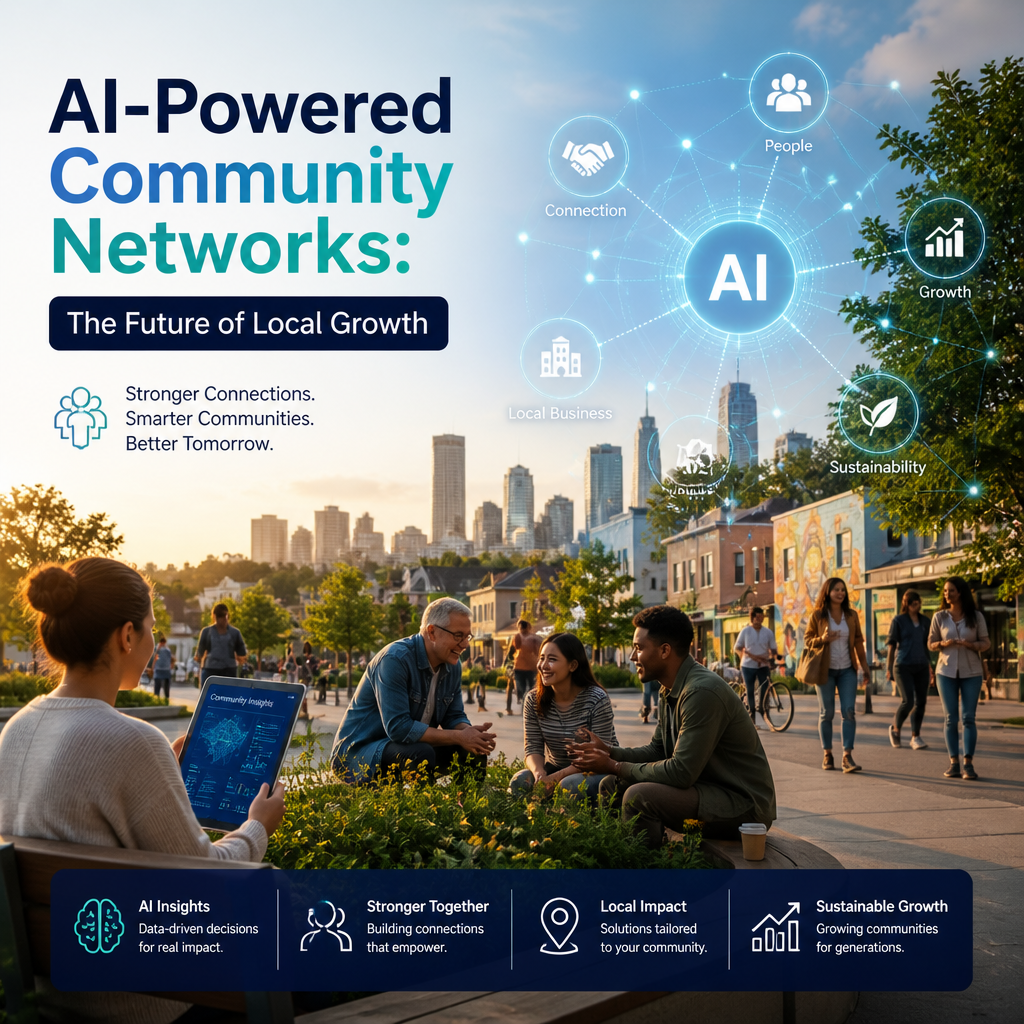
AI-Powered Community Networks: The Future of Local Growth
Why AI-Powered Community Networks Are the Future of Local Growth
Local communities have always depended on connection. Neighbors share recommendations, small businesses build loyal customer bases, and local organizations work together to solve shared problems. Yet many communities still rely on fragmented communication channels, outdated directories, and limited access to useful data.
AI-powered community networks are changing that. By combining artificial intelligence with local platforms, these networks help people, organizations, and businesses collaborate more efficiently. They make it easier to discover opportunities, understand community needs, and support sustainable local growth.

What Are AI-Powered Community Networks?
An AI-powered community network is a digital platform that uses artificial intelligence to connect people and resources within a specific geographic or interest-based community.
These platforms can analyze local activity, recommend relevant connections, organize information, and automate routine communication. Unlike traditional social networks, their purpose is not simply to generate engagement. They are designed to create practical value for residents, entrepreneurs, nonprofits, schools, and local governments.

Common features may include:
- Personalized local recommendations
- Smart business and service directories
- Automated event promotion
- Community discussion tools
- Local economic and demographic insights
- Volunteer and resource matching
- Multilingual communication support
By bringing these capabilities together, AI-powered community networks turn scattered information into useful, accessible knowledge.

Better Connections Between People and Businesses
One of the biggest benefits of AI-powered community networks is improved local discovery. Many small businesses offer excellent products and services but struggle to reach the people who need them. At the same time, residents may be unaware of nearby businesses, events, or support programs.
AI can bridge this gap by matching users with relevant local opportunities. For example, a platform might recommend a nearby repair service based on a resident’s search history, or connect a small business owner with a local grant program. It can also help residents find community events that match their interests and availability.
These personalized connections strengthen local spending and encourage people to participate more actively in their communities.
Supporting Small Business Growth
Small businesses are central to healthy local economies, but they often lack the marketing budgets and analytical resources available to larger companies. AI-powered community networks can help level the playing field.
Business owners may use these platforms to:
- Understand local customer interests
- Identify emerging demand
- Promote events and special offers
- Collaborate with complementary businesses
- Gather feedback from nearby customers
- Find local suppliers, mentors, and funding
AI tools can also simplify tasks such as content creation, customer communication, and market research. This allows entrepreneurs to spend less time managing repetitive work and more time improving their products and services.
Making Community Decisions More Responsive
Local leaders need accurate information to make effective decisions. Traditional surveys and public meetings can be useful, but they often capture only a portion of community opinion.
AI-powered networks can analyze conversations, feedback, participation patterns, and service requests to identify common concerns. For instance, residents may repeatedly mention transportation problems, limited childcare, or a lack of accessible public spaces. When this information is organized and presented responsibly, decision-makers can respond more quickly.
The goal is not to replace human judgment. Instead, AI provides a clearer picture of local priorities and helps leaders direct resources where they can have the greatest impact.
Encouraging Inclusion and Participation
Community participation is not always evenly distributed. People with busy schedules, language barriers, disabilities, or limited access to traditional institutions may find it difficult to get involved.
AI can make local engagement more accessible through translation, voice interfaces, automated summaries, and personalized notifications. Residents can receive information in formats that are easier for them to understand and use.
Inclusive design is essential, however. Communities must ensure that digital tools do not exclude people who lack reliable internet access or technological confidence. Public access points, digital education, and offline communication should remain part of the broader strategy.
Building Trust Through Responsible AI
The success of AI-powered community networks depends on trust. Platforms must be transparent about how data is collected, analyzed, and used. Strong privacy protections are especially important when systems handle personal information or sensitive community feedback.
Responsible networks should prioritize:
- Clear privacy policies
- Secure data storage
- Human oversight
- Protection against algorithmic bias
- Accessible explanations of AI-generated recommendations
- Community input into platform development
When residents understand how a platform works and have a voice in its design, they are more likely to participate.
A More Connected Local Future
AI-powered community networks are not a replacement for real-world relationships. They are tools that make those relationships easier to build and strengthen. By connecting residents with businesses, resources, and decision-makers, they can help communities become more informed, inclusive, and economically resilient.
The future of local growth will depend not only on advanced technology, but on how thoughtfully that technology is used. When AI is guided by transparency, accessibility, and community values, it can transform local information into meaningful action—and help more people benefit from the places they call home.