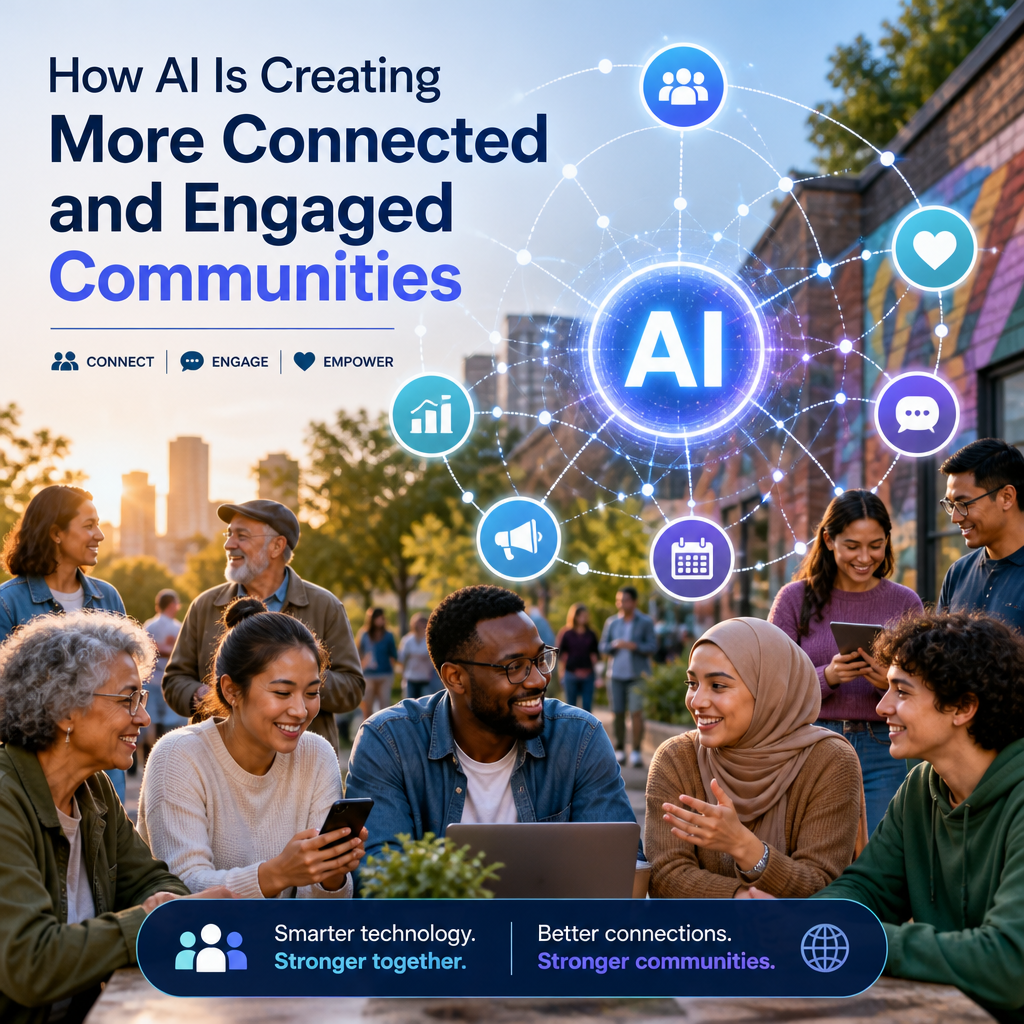
How AI Is Creating More Connected and Engaged Communities
How AI Is Creating More Connected Communities
Artificial intelligence is changing how people communicate, collaborate, and participate in community life. While AI is often associated with automation and advanced technology, its most meaningful impact may be helping people feel more connected to one another.
From neighborhood networks to online support groups, AI is making it easier to share information, discover common interests, and create spaces where more people can participate.

Improving Communication and Access
One of the simplest ways AI supports connected communities is by making communication more accessible. Translation tools can help people who speak different languages understand one another in real time. Speech-to-text services can support people with hearing difficulties, while text-to-speech technology can make online information more accessible to people with visual impairments or reading challenges.
These tools remove barriers that have traditionally limited participation. A local meeting, community announcement, or public discussion can reach a wider audience when language and accessibility needs are considered from the beginning.

AI can also summarize long documents, organize important updates, and highlight key information. This helps residents, volunteers, and community members stay informed without having to search through large amounts of content.
Connecting People With Shared Interests
Many people want to take part in community activities but do not know where to begin. AI-powered platforms can recommend local events, volunteer opportunities, discussion groups, and social activities based on a person’s interests and location.

For example, someone interested in gardening might discover a neighborhood planting project. A new resident could find a local cultural group or community center. A student may be matched with a mentorship program or a volunteer opportunity that fits their skills.
These recommendations can introduce people who might otherwise never meet. By helping individuals find meaningful points of connection, AI can support relationships that extend beyond digital platforms.
Supporting Local Problem-Solving
Communities often face challenges such as transportation, housing, public safety, and access to essential services. AI can help organize information about these issues and identify patterns that may not be immediately visible.
Local organizations can use data tools to understand which services are most needed, where resources are limited, or when demand increases. This can lead to better planning and more targeted support.
AI may also help residents report problems, such as damaged roads, broken streetlights, or overflowing waste bins. Automated systems can direct reports to the appropriate department and provide updates as issues are addressed. When people can see that their concerns are being recognized and acted upon, trust and participation can grow.
Strengthening Online Communities
Online communities have become important spaces for learning, support, and collaboration. AI can help moderators identify harmful content, reduce spam, and keep discussions organized. This allows communities to remain welcoming and useful as they grow.
AI tools can also help summarize discussions, answer common questions, and guide new members toward relevant resources. In educational or professional groups, these features make it easier for participants to find information and contribute to ongoing conversations.
However, technology should support human interaction rather than replace it. The strongest online communities still depend on empathy, thoughtful moderation, and genuine participation from their members.
Encouraging More Inclusive Participation
AI can help community leaders understand which groups are being left out. By reviewing participation data, organizations may discover that certain neighborhoods, age groups, or demographic communities are not engaging with existing programs.
This information can encourage leaders to adjust meeting times, improve outreach, provide transportation, or offer services in additional languages. Used responsibly, AI can help create more inclusive opportunities for participation.
Still, data must be handled carefully. Communities need transparency about how information is collected and used. Privacy, consent, and fairness should remain central to every AI project.
The Human Element Still Matters
AI can connect people, but it cannot replace the value of human relationships. A recommendation may introduce someone to a volunteer group, but trust develops through shared experiences. A translation tool may enable a conversation, but understanding grows through patience and respect.
The best use of AI is to make participation easier while leaving room for human judgment and creativity. Communities should use technology to open doors, not control conversations.
A More Connected Future
As AI continues to develop, its role in community life will likely expand. It may help local organizations coordinate resources, make public services more responsive, and give more people a voice in decisions that affect them.
The goal should not be technology for its own sake. The goal is to build communities where people can find support, share ideas, and contribute meaningfully. When designed with care, AI can help transform disconnected individuals into active participants in a stronger, more connected society.