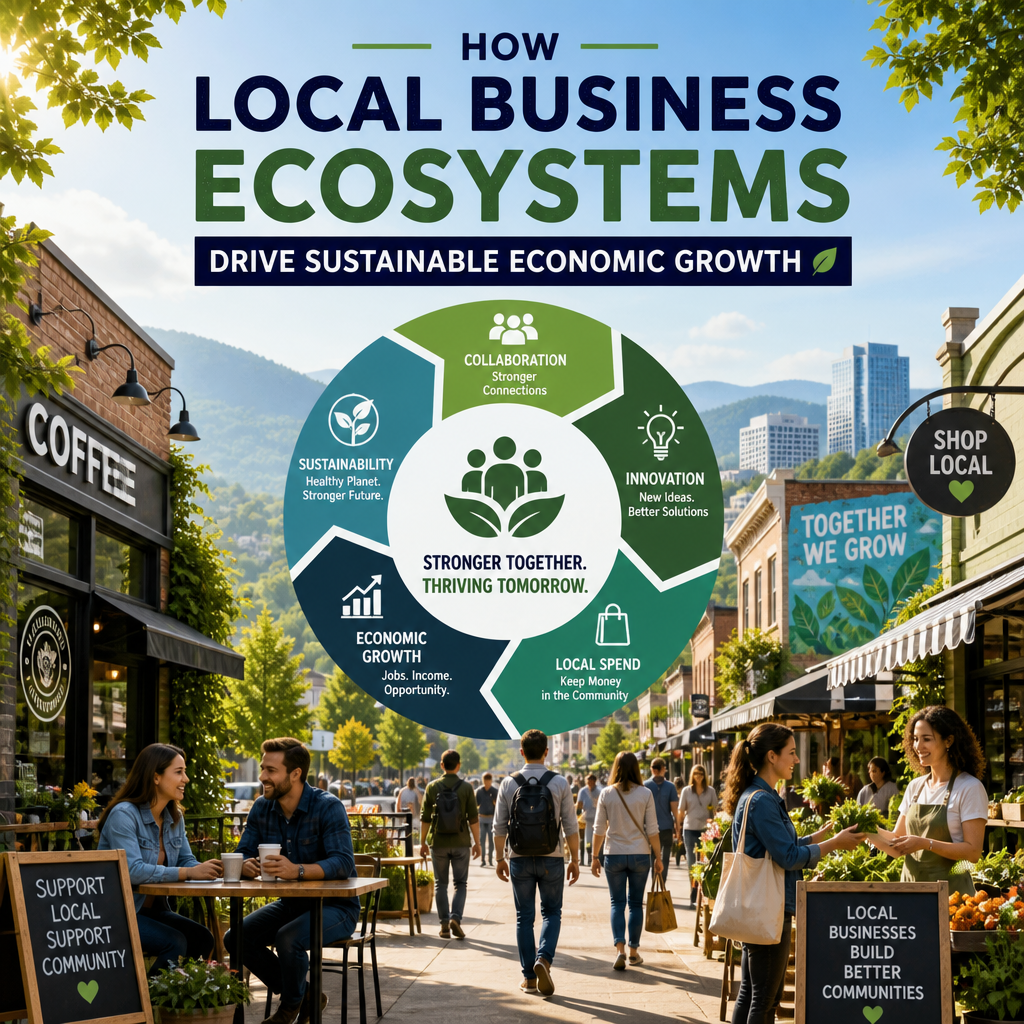
How Local Business Ecosystems Drive Sustainable Economic Growth
How Local Business Ecosystems Create Sustainable Growth
Sustainable growth rarely happens in isolation. For many small businesses, long-term success depends on the strength of the community around them. Suppliers, customers, local government, financial institutions, educators, nonprofits, and other businesses all contribute to an environment where companies can grow responsibly.
This interconnected network is known as a local business ecosystem. When its members collaborate, share resources, and solve problems together, they can create stronger economies, more resilient businesses, and lasting opportunities for residents.

What Is a Local Business Ecosystem?
A local business ecosystem is the network of organizations, people, and resources that support economic activity in a specific community. It includes more than individual companies. It may involve:
- Small and large businesses
- Local suppliers and service providers
- Chambers of commerce and business associations
- Banks, credit unions, and investors
- Schools, colleges, and training organizations
- Municipal agencies and community groups
- Customers and local residents
Each part of the ecosystem plays a role. A business may provide jobs, purchase materials from nearby suppliers, support local events, and train future employees. In return, it benefits from a skilled workforce, loyal customers, accessible services, and a supportive business environment.

Collaboration Strengthens Local Businesses
One of the greatest benefits of a connected business community is collaboration. Local companies can work together to reduce costs, reach new customers, and improve the quality of their services.
For example, restaurants may partner with nearby farms, designers may collaborate with retailers, and service providers may refer clients to one another. These relationships keep more money circulating within the community while helping businesses access expertise they may not have internally.

Shared Resources and Knowledge
Small businesses often face limited budgets and staff. Through local networks, they can share knowledge about marketing, hiring, technology, regulations, and financing. Business associations may organize workshops, mentoring programs, or networking events that help owners make better decisions.
Shared resources can also include:
- Co-working spaces
- Group purchasing programs
- Local advertising campaigns
- Equipment and technology
- Training and professional development
These forms of cooperation lower barriers to growth and make it easier for smaller companies to compete.
Local Talent Supports Long-Term Growth
A strong business ecosystem connects employers with education and training providers. This relationship helps companies find qualified workers while giving residents clearer career pathways.
Businesses can support schools through internships, apprenticeships, guest lectures, and workplace training. Educational institutions can respond by developing programs that reflect real local workforce needs. This reduces skills gaps and helps young people see viable opportunities close to home.
Investing in local talent also improves employee retention. Workers are more likely to remain in a community when they can build careers, develop new skills, and find opportunities for advancement without relocating.
Resilience Through Diversification
Communities that depend too heavily on one industry can be vulnerable to economic disruptions. A diverse local business ecosystem provides greater stability because different sectors may respond differently to changing conditions.
For instance, a community with businesses in healthcare, technology, manufacturing, retail, tourism, and professional services is better positioned to withstand a downturn in any single sector. Local partnerships can encourage entrepreneurship in underrepresented industries and help existing companies diversify their products or markets.
Resilience also comes from strong relationships. During a crisis, businesses that already communicate and cooperate can share information, coordinate resources, and recover more quickly.
Responsible Growth Benefits the Community
Sustainable growth is not measured only by revenue. It also considers environmental responsibility, social well-being, and the ability of future generations to prosper.
Local businesses can contribute by:
- Hiring from nearby communities
- Paying fair wages
- Reducing waste and energy use
- Supporting local charities and events
- Choosing ethical and regional suppliers
- Making products and services accessible
When businesses grow in ways that respect people and the environment, they build trust. That trust often leads to stronger customer loyalty, better employee engagement, and more durable relationships with community partners.
How Communities Can Build Stronger Ecosystems
Creating a healthy local business ecosystem requires intentional effort. Leaders can begin by identifying existing strengths and gaps within the community. They can then bring businesses, educators, residents, and public organizations together around shared goals.
Useful actions include:
- Creating regular networking and collaboration opportunities.
- Improving access to affordable financing and business advice.
- Connecting employers with schools and training providers.
- Supporting entrepreneurs from diverse backgrounds.
- Investing in reliable infrastructure and digital access.
- Promoting local purchasing and community-based initiatives.
The most successful ecosystems are inclusive. They make room for startups, family-owned businesses, established companies, freelancers, and social enterprises alike.
The Foundation of Sustainable Prosperity
A local business ecosystem turns individual success into shared progress. By encouraging collaboration, developing local talent, supporting responsible practices, and strengthening resilience, communities can create growth that lasts.
Businesses do not operate separately from their surroundings. They are part of a living network. When that network is healthy, companies gain the support they need to adapt and expand—and communities gain jobs, innovation, stability, and a stronger future.